🔰 SECTION 0 — Redis Fundamentals (Before Any Commands)
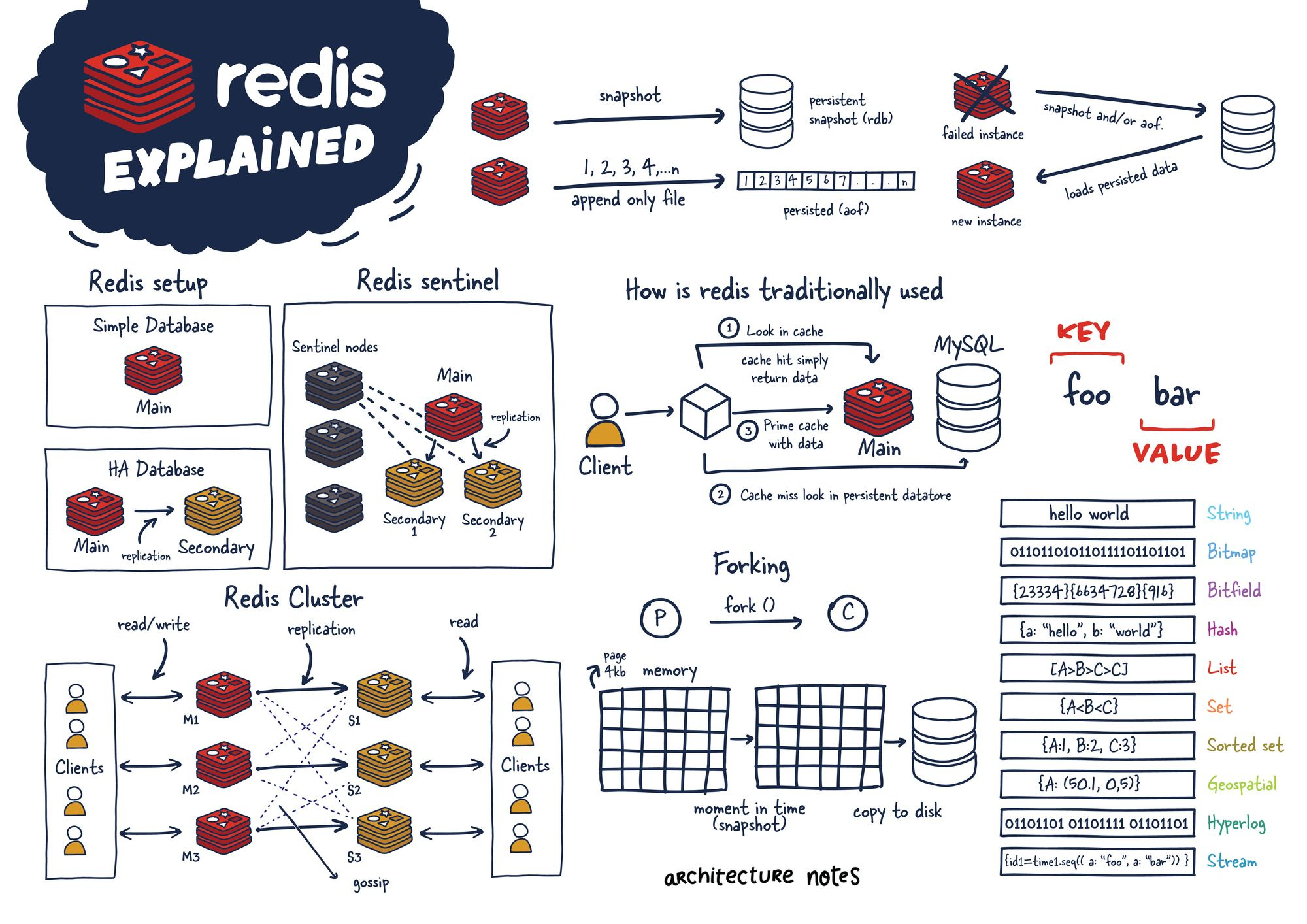
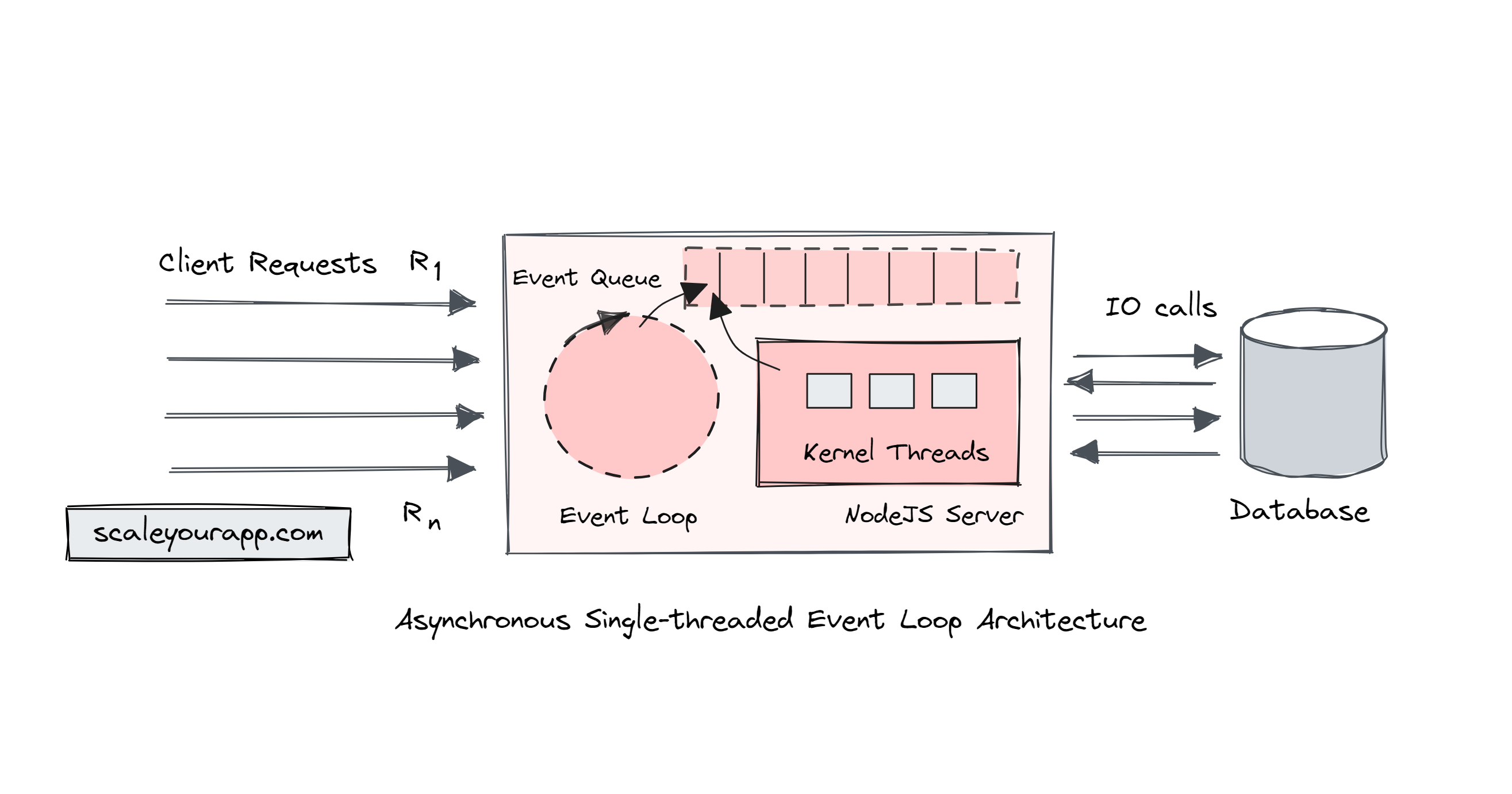
🧠 What Redis really is (important)
Redis is:
- A single-threaded event loop
- Holding data entirely in RAM
- Persisting to disk optionally
- Optimized for very fast reads/writes
Redis is fast because it avoids locks and disk I/O
🧩 Internal mental model
KEY (string)
  ↓
Value (string | hash | list | set | zset | stream)
  ↓
Stored in RAM
  ↓
Optional persistence to disk
🔌 Start & Connect (once)
Test:
Redis replies:
Meaning:
Redis event loop is alive and accepting commands
1️⃣ STRING — The Atomic Unit of Redis
🧠 Why strings exist
Strings are:
- The fastest Redis type
- Atomic (safe for counters)
- Used in 90% of Redis use cases
Real-world uses
- Cache values
- Session tokens
- Feature flags
- Counters
- Locks
🧩 How Redis stores a string
Internally:
- Key is always a string
- Value is a byte array
- TTL stored separately
🧪 Step-by-step
Step 1 — Store value
Redis does:
- Allocates memory
- Stores key hash
- Stores value bytes
Step 2 — Read value
Redis:
- Hashes key
- Direct memory lookup
- Returns value
Step 3 — Add TTL (CRITICAL)
🔍 What happens internally:
- Redis adds expiry metadata
- Key auto-deletes after TTL
Why TTL matters:
Redis will crash if you forget TTLs in cache-heavy systems
Step 4 — Atomic counter
Why INCR is special:
- No race condition
- Single-threaded atomic op
Used for:
- Rate limiting
- Analytics
- Quotas
🚫 DON’T
- Store large JSON blobs
- Use strings without TTL for cache
2️⃣ HASH — Structured Data Without JSON
🧠 Why hashes exist
Hashes solve:
- Storing structured data
- Updating single fields
- Avoiding JSON parsing
Real-world uses
- User profiles
- Product metadata
- Configuration
🧩 Internal model
Redis stores fields compactly → memory efficient.
🧪 Step-by-step
Step 1 — Create hash
Redis:
- Creates hash table
- Stores fields separately
Step 2 — Read data
Why hashes are fast:
- Field lookup is O(1)
Step 3 — Update one field
Only role changes — no full rewrite.
Step 4 — Expiry on hash
⚠ TTL applies to entire hash, not fields.
🚫 DON’T
- Store nested JSON in hashes
- Use hashes without TTL in cache
3️⃣ LIST — Ordered Queue / Stack
🧠 Why lists exist
Lists solve:
- Queues
- Background jobs
- Message buffering
Real-world uses
- Job queues
- Email sending
- Event buffering
🧩 Internal model
Linked list internally → fast push/pop.
🧪 Step-by-step
Step 1 — Push jobs
Step 2 — View list
Step 3 — Pop job (worker)
FIFO achieved by:
Step 4 — Blocking pop (IMPORTANT)
Meaning:
- Worker waits
- No CPU waste
- Production-safe
🚫 DON’T
- Use lists for durable queues
- Use lists without monitoring length
4️⃣ SET — Fast Membership & Uniqueness
🧠 Why sets exist
Sets solve:
- Uniqueness
- Membership checks
- Grouping
Real-world uses
- Online users
- Feature flags
- Permissions
🧩 Internal model
Unordered hash set:
🧪 Step-by-step
Membership check is O(1) — extremely fast.
Set math (powerful)
Used for:
- Access control
- A/B testing
🚫 DON’T
- Expect ordering
- Store huge sets without memory limits
5️⃣ SORTED SET — Ranking & Time-Based Logic
🧠 Why sorted sets exist
Sorted sets solve:
- Ranking
- Priority
- Time ordering
Real-world uses
- Leaderboards
- Rate limiting
- Scheduling
🧩 Internal model
Score determines order.
🧪 Step-by-step
Update score
Used for:
- Sliding window rate limits
- Priority queues
🚫 DON’T
- Use lists for ranking
- Forget score precision
6️⃣ TTL & Expiry — Redis Safety Valve
🧠 Why expiry is critical
Redis memory is finite. TTL prevents:
- OOM crashes
- Memory leaks
🧪 Commands
Redis deletes keys:
- Lazily on access
- Actively via background cleanup
7️⃣ Pub/Sub — Fire-and-Forget Messaging
🧠 Why Pub/Sub exists
- Real-time fan-out
- Low latency
- No persistence
🧪 Demo
Terminal 1:
Terminal 2:
⚠ Message lost if no subscriber.
8️⃣ Streams — Durable Messaging (Advanced)
🧠 Why streams exist
Streams solve:
- Reliable messaging
- Event sourcing
- Replayability
🧪 Demo
Consumer group:
Used instead of:
- Pub/Sub
- Lists (for jobs)
9️⃣ Persistence — Data Survival
🧠 Redis is RAM-first
Persistence is backup, not primary storage.
🧪 Check config
Enable AOF:
🔐 10️⃣ Security Basics
Never expose Redis publicly.
🏁 FINAL TRUTH ABOUT REDIS
Redis is not a database replacement Redis is a performance accelerator